
A timetabled subject.
Not a Friday reward.
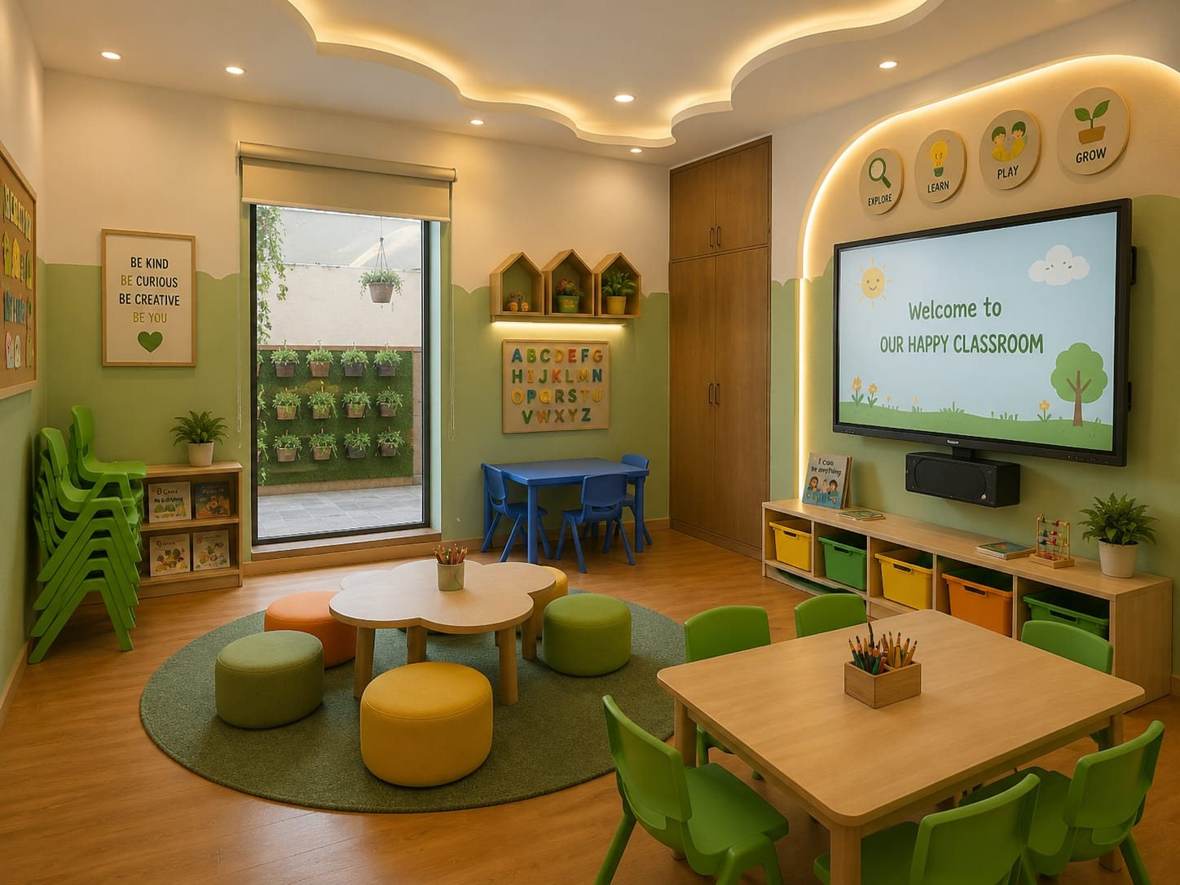
A dedicated art studio, a music room and a movement hall — each with a specialist teacher and a weekly slot for every grade, graded and reported like any other subject.
specialist spaces
every week
weekly slot
a year
The four disciplines
Four ways a child
can be good at something.
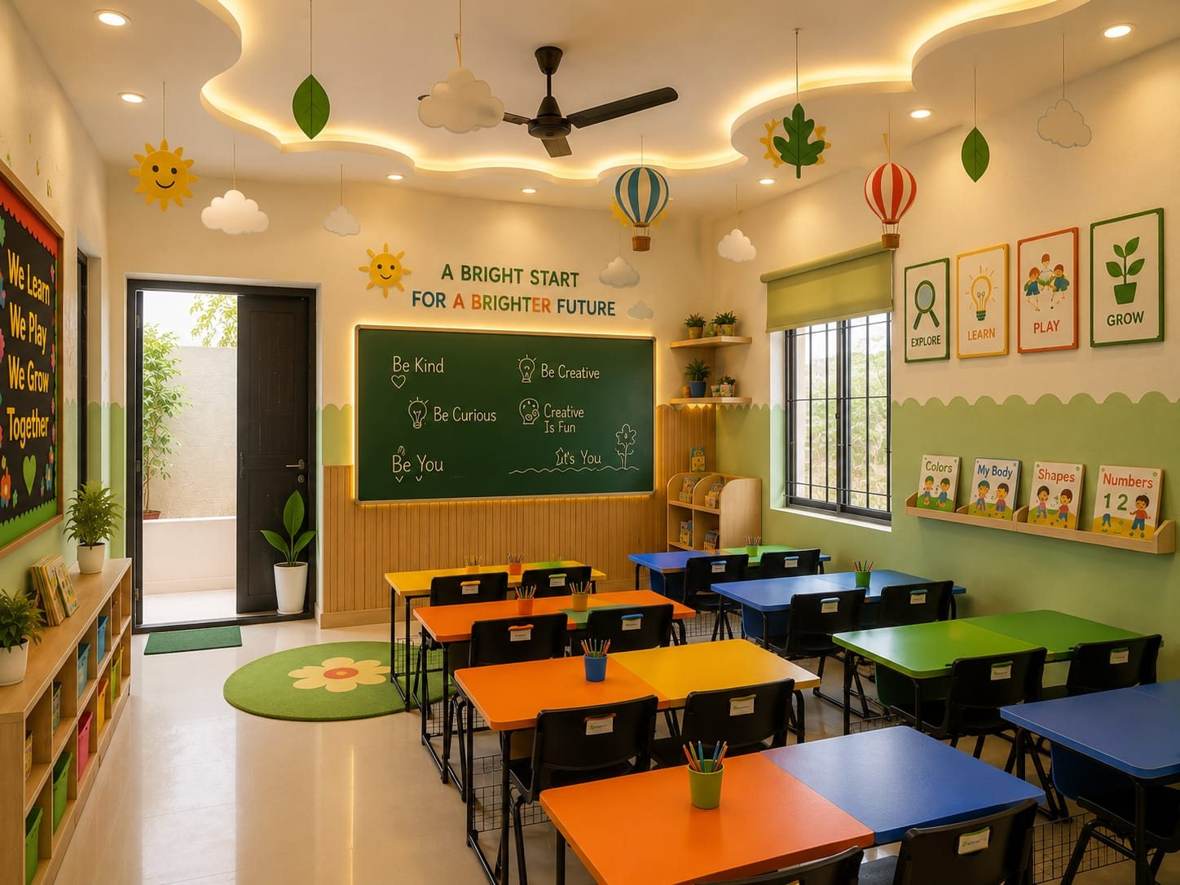
Each runs as a scheduled subject with a specialist teacher, a scheme of work and a report line. A child who shines here is recognised as clearly as one who shines in mathematics.
What is actually taught
Twelve strands across
the four disciplines.
In the timetable
Where the arts sit in
a normal week.
Weekly periods by stage. In the junior grades the arts carry more time, because that is when a child discovers what they are drawn to.
The progression
From first crayon
to a full stage.
Five stages. A child moves up when they are ready, not when they reach a particular grade.
Exposure
Every discipline tried in the junior years — nobody chooses before they have handled clay, held a beat and stood on a stage.
Technique
Formal instruction begins. Scales and raga, line and proportion, adavus and posture, projection and diction.
Ensemble
Working as part of something bigger — the choir, a dance troupe, a cast, a group exhibition.
Performance
Annual day, cultural festivals and inter-house competition, in front of a real audience of families.
Portfolio & pursuit
Students aiming at design school, music college or a creative degree build a portfolio with the guidance team.
The performance year
Six moments on a
real stage.
A child who performs six times a year stops being frightened of an audience. That is the actual curriculum here.
Independence & Onam
August. Assembly performances, patriotic choir and regional dance from the junior grades.
Art exhibition
October. A full display of student work from every grade, hung and curated by the students themselves.
Cultural festival
November. Music and dance across classical, contemporary and folk, with families invited.
Annual Day
December. The largest production of the year — theatre, dance and choir, with every grade on stage.
Inter-house arts
February. House competition in vocal, instrumental, dance, elocution and on-the-spot painting.
Graduation showcase
March. Senior students perform and exhibit before leaving. The final word belongs to them.
Why we protect this
The arts are not
a soft option.
They are where a child learns to practise something badly for months before it comes right — which is the same skill that carries them through an A Level.
- Specialist teachers, not class teachers filling a slot
- Graded and reported alongside academic subjects
- Protected in the timetable, including in examination years
- Portfolio support for students applying to creative courses
- Instruments and materials provided on campus
- Performance opportunities for every child, not only the confident ones
Ask to see the
art room.
Any school can show you a corridor. Ask to see where the work actually gets made, and who teaches it.